Darren and Sandy (Harkness) Van
Soye
(Reprinted
with permission from "Experiences Magazine" 2004)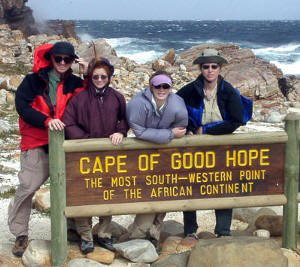
This wasn’t your ordinary
vacation. This was a lifestyle change that lasted more than four
months. Departing in September 2003 and returning in January 2004,
Darren and Sandy Van Soye, along with daughters Lauren, age 13, and
Kristen, age 10, embarked on 19-week adventure, visiting12 countries
of England, South Africa, Namibia, Botswana, Zambia, Tanzania,
India, Australia, Brunei, Thailand, Cambodia and France. Darren
is a manager in IT Systems Integration and Architecture, Credit
Services, while Sandy is a director in IT Applications Solutions,
Product Applications Development, Credit Services, both with
Experian.
“We had been talking about
doing this for the last four years,” said Sandy. “We found that 2003
gave us a good window of time, given our daughters' ages. We came up
with a financial plan and saved money during that time.”
Sandy and Darren explained
that their main purpose of the trip was to provide an educational
experience for Lauren and Kristen. “It was also an opportunity for
us to learn because we are fascinated with history, archeology and
architecture. “They home-schooled their daughters on the trip, after
working closely with their school before leaving. Most of the
countries they selected to visit integrated with their daughters’
studies. For example, Kristen studied Africa and India while they
were actually in those countries.
They worked closely with
their daughters' principal, teachers and a math tutor months before
leaving so Lauren and Kristen could get ahead and learn the
concepts. Lauren and Kristen did some of their schoolwork over the
summer to minimize the amount of work while traveling. They obtained
lesson plans and books to take along for their studies while
traveling. To reduce the weight of materials to carry, they cut up
workbooks and took double-sided copies. They also arranged to ship
books home in exchange for new ones sent to them by Sandy’s parents
while in Australia.
Darren and Sandy each requested an unpaid leave of absence from
work, with the understanding that there was no guarantee of job
protection. “Both our managers graciously granted us a leave. We
also spent the last few weeks before we left turning over work to
our coworkers who acted in our place while we were gone. Even with
all this, we didn’t’ know until we came back if we actually had
jobs,” explained Sandy.
 Travel
planning also included getting four shots each to protect them from
yellow fever, typhoid, encephalitis and hepatitis. They requested
prescriptions for antibiotics and malaria, and purchased several
over-the-counter drugs, and bought travelers’ and evacuation
insurance policies. Travel
planning also included getting four shots each to protect them from
yellow fever, typhoid, encephalitis and hepatitis. They requested
prescriptions for antibiotics and malaria, and purchased several
over-the-counter drugs, and bought travelers’ and evacuation
insurance policies.
The pace of being on the
move for 19 weeks was challenging, said Sandy, and they missed some
of the creature comforts of home, such as English printed material,
hot water, comfortable beds and TV (especially for the kids). There
was one hostel in Zambia that they had to leave because it was so
bad. The “eastern” toilets, all agreed, also were “challenging” to
use.
While “roughing it” most of
the time in hostels, they stayed at a nice hotel at least once a
week. Most of the hostels and huts (on safaris) were clean and
secure, and many had washing machines as well as kitchens, said
Darren. “We cooked many meals along the way, particularly pasta
because it’s easy to prepare. In fact, we ate pasta for Christmas
dinner while in Australia. When you’re traveling for this long, you
have to find ways to stretch your budget.”
Since most of the trip was
spent in warm places, the heat and the bugs were almost constant,
said Sandy. They dealt with it as best as possible by bringing
supplies such as insect repellant, lightweight clothing, hats and
sunscreen. “One interesting tip we learned was to make sure water
bottle caps were securely fastened – this was meant to prevent
buying used bottles filled with unsafe water,” explained Darren. “We
also had to be on the alert for scams and rip-offs in many places,”
said Sandy. The travel safety guidebooks were very helpful, added
Darren.
 “There
was a nice simplicity on the trip when all you have is a 15- to
30-pound backpack with you,” said Sandy. They each packed three
outfits, sandals, boots, fleece jackets, long under wear and rain
jackets. Other than receiving a shipment of books, lithium batteries
for their cameras and sending back their cold-weather clothes in
Australia, they made do with their original supplies. “There
was a nice simplicity on the trip when all you have is a 15- to
30-pound backpack with you,” said Sandy. They each packed three
outfits, sandals, boots, fleece jackets, long under wear and rain
jackets. Other than receiving a shipment of books, lithium batteries
for their cameras and sending back their cold-weather clothes in
Australia, they made do with their original supplies.
They experienced famous
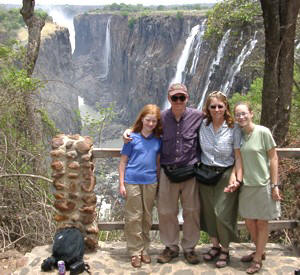
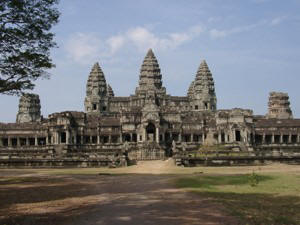
sights such as the Taj Mahal, the Eiffel Tower, the Sydney Opera
House and Harbor, Victoria Falls and Angkor Wat (ancient ruins in
Cambodia). Less typical experiences included trekking in the
Himalayas and in the jungles of Borneo and going on safaris in
Africa. They visited a real village in Zambia and learned about the
villagers’ way of life and stayed in an authentic Thai village for
two nights. They learned about the countries’ history, different
cultures, customs and religions, including Hinduism, Buddhism and
Islam, and attended a Hindu service and visited several Buddhist
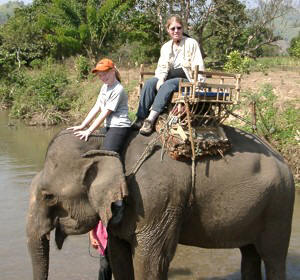
monasteries. They rode elephants and camels, and saw lions, emus,
kangaroos, jackass penguins, and many other exotic animals.
The rode trains in Africa, India, Australia, Thailand and Europe. In
all, they took seven overnight train rides during the trip. “Riding
trains is sort of a hobby for us, so it was great that we were able
to have so many experiences in many different countries,” said
Sandy. Their favorite was a three-day/two-day night trip from Zambia
to Tanzania, said Darren. “Even though the cars were in poor repair
and had bugs, and it was hot and humid and the food wasn’t very
good, we were in Africa. On the last day, we traveled through Selous
Game Reserve in Tanzania, where we actually saw elephants, giraffe,
wildebeest, warthog and zebra from our window. It wasn’t hard to
imagine what travel was like one hundred years ago.”
“We were really scared before we left and were
wondering if things would work out,” said Sandy. “It was a long time
to be away and we didn't know if we would get hurt, sick or be in
danger.” While they selected their itinerary with safety in
mind based on information from guidebooks, they were always on
guard. A few times they found themselves walking in a strange city
at night such as a narrow street in Cape Town, South Africa. Darren
said he and Lauren were out late and had to walk through dark,
deserted city streets in Lusaka, Zambia. “I also fell while jungle
trekking on the island of Borneo. I realized that if I had broken by
leg, hip or arm, the trip would probably be over. At the time, we
were hours away from any kind of real medical help. But, you take a
chance every day when you get into your car. Our goal was to do the
research, determine the risks, and either avoid or mitigate them.”
 Sandy
and Darren said that the length of time provided a chance to really
get away from the day-to-day issues at home and reflect on living
through the time on the trip. The family was together almost all
day, every day during the whole trip. While that was challenging at
times, they also learned a lot about each other and felt like they
got to know their girls better at an important time in their lives.
“Because of the nature of the trip, we had lots of time to talk,
giving us the chance to have discussions that we otherwise wouldn’t
have had,” said Darren. “We also had conflicts, but can I look back
on these as a learning experience.” Sandy
and Darren said that the length of time provided a chance to really
get away from the day-to-day issues at home and reflect on living
through the time on the trip. The family was together almost all
day, every day during the whole trip. While that was challenging at
times, they also learned a lot about each other and felt like they
got to know their girls better at an important time in their lives.
“Because of the nature of the trip, we had lots of time to talk,
giving us the chance to have discussions that we otherwise wouldn’t
have had,” said Darren. “We also had conflicts, but can I look back
on these as a learning experience.”
Most importantly, they feel the trip brought the family closer. “It
gave all of us, especially our daughters, a worldview of things,”
said Sandy and Darren. “They learned not to take things for granted
and got real world experience from interacting with other people. We
literally watched our daughters grow up before our eyes, when we
compare them from the beginning of the trip to the end. We’re now
noticing different behaviors in social situations where they have a
new confidence. Both seem more comfortable speaking with adults or
calling someone on the phone.”
“Almost without exception,
we met people who were hospitable and friendly and who made us feel
welcome,” explained Sandy. “People are so happy to see anyone
travelling internationally at this time that it is really a shame
that more people are not doing so. As we met people we also felt
privileged to be Americans. People definitely aspire to know more
about America and want to come here, so we felt very blessed to be
living here.” |